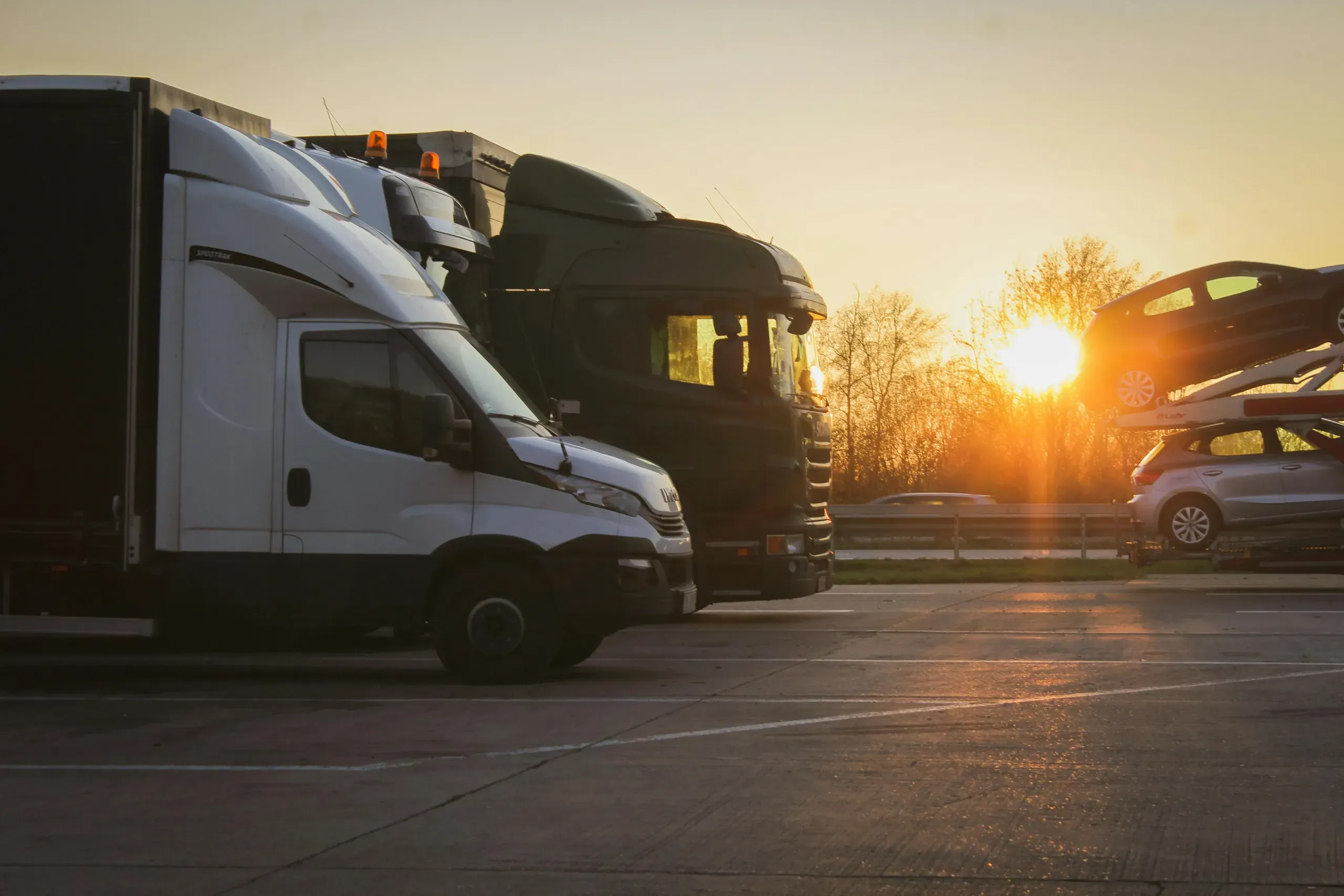
Ship Car from Illinois to Missouri
Shipping a vehicle from Illinois to Missouri covers approximately 274 miles via I-55 and I-44, with a typical carrier transit time of two to three days. Whether you are relocating for work, purchasing a vehicle from a private seller, or coordinating a long-distance move for a family member, understanding the transport process is essential for a smooth experience. This guide covers how to manage your shipment, including typical cost ranges, expected transit timelines, the booking process, carrier verification, vehicle preparation, and common scenarios to help you navigate your move with confidence.
- No-obligation quote within 2 minutes
- Price all-inclusive
- No charge until driver confirmed
- Distance
- 274 mi
- Transit time
- 2–3 days
- Open carrier from
- $450
How much does it cost to ship a car from Illinois to Missouri?
For a 274-mile trip between Illinois and Missouri, you can typically expect to pay between $450 and $600 for open transport, or $800 to $1,075 for enclosed shipping, with transit usually completed in two to three days. Ship Car Pros functions as a referral service, connecting you with independent carriers from our vetted network rather than operating the trucks ourselves. Your final price depends on six specific factors, including your vehicle's size, its operability, and how much flexibility your pickup schedule allows. While these ranges provide a solid baseline for your budget, the exact cost is determined by the real-time supply of drivers available along the I-55 and I-44 corridors at the time you book.
What factors affect car shipping cost?
Several variables influence your final quote, as carriers balance their route efficiency against your specific requirements. We analyze these elements to ensure your shipment stays within the market-rate range:
- Vehicle dimensions and weight: Larger trucks and SUVs occupy more space than standard sedans, impacting the trailer's total capacity.
- Transport type: Selecting enclosed shipping provides premium protection, though it costs more than standard open-air transport.
- Schedule flexibility: Providing a wider pickup window allows carriers to integrate your vehicle into an existing route, reducing costs.
- Seasonal demand: High-traffic periods, such as peak moving seasons, can increase competition for available trailer space.
- Route accessibility: Metro hubs are generally more affordable than remote, rural locations that take drivers off their primary paths.
- Vehicle operability: Non-running vehicles require specialized winching equipment, which increases the labor and time required for loading.
Open vs. enclosed car transport: which should you choose?
Choosing between open and enclosed transport comes down to your vehicle's value and your specific protection needs. Open transport is the industry standard, used for about 85% of all shipments. It is the same method dealers use to move new inventory from factories to showrooms. With a typical cost around $507, it is the most efficient choice for daily drivers, standard SUVs, and commuter vehicles.
Enclosed transport provides a fully sealed environment, shielding your car from road debris, weather, and dust. While this service averages around $887, it is the preferred choice for high-value luxury cars, classic restorations, or vehicles with low ground clearance that require extra care during loading. If your vehicle is valued over $75,000 or is a custom show piece, the added investment in an enclosed trailer ensures it arrives in pristine condition. For most other vehicles, open transport remains the reliable, standard solution.
- Open carrier
- $450–$600
- Standard 7–10 car hauler.
- Enclosed carrier
- $800–$1,075
- Sealed trailer for high-value vehicles.
How long does it take to ship a car from Illinois to Missouri?
You can typically expect your vehicle to be in transit for two to three days for this 274-mile journey. While the distance is relatively short, carriers must account for the time required to navigate traffic, complete mandatory safety stops, and coordinate the loading or unloading of other vehicles on their trailer. Because drivers are limited by federal rules regarding how many hours they can spend behind the wheel each day, they rarely cover the entire route in a single sitting. Instead, they balance your delivery with their broader route schedule. We will outline the specific steps involved in the pickup and delivery process in the following sections.
Which routes do carriers usually take?
Carriers typically move vehicles between Illinois and Missouri using the I-55 S corridor. This route provides a direct path from major Illinois hubs like Chicago and Bloomington straight into the St. Louis metropolitan area. For deliveries extending further into Missouri, drivers frequently transition to I-44 W. This stretch takes them from the St. Louis region through the rolling terrain of the Ozark Plateau toward Springfield and Joplin. While the Illinois portion of the route is largely flat, the transition into Missouri’s southern geography introduces more winding sections and elevation changes. Carriers prefer these major interstates because they offer the most consistent road conditions and reliable infrastructure for heavy trailers.
What can delay your shipment?
While most shipments move smoothly, occasional delays are a standard part of the auto transport industry. Weather is a primary factor; while the route is relatively flat, winter ice storms-particularly through the Ozark hills on I-44-can force carriers to pause for safety. Similarly, spring rains in Missouri river floodplains occasionally cause localized road closures. Logistics also play a role: pickup dates are estimates rather than hard appointments. Booking around holidays or weekends often gaps availability, as carrier activity slows down. Additionally, if you are purchasing through an auction, missing gate pins or lot numbers will halt the process until the facility releases the vehicle to our driver.
Popular Routes
Major city-to-city routes on the Illinois → Missouri corridor.
| From | To | Approx. distance | Transit |
|---|---|---|---|
| Chicago, IL | St. Louis, MO | ~260 mi | 2-4 days |
| Rockford, IL | Kansas City, MO | ~360 mi | 2-4 days |
| Round Lake Beach, IL | Springfield, MO | ~450 mi | 2-4 days |
| Peoria, IL | Columbia, MO | ~190 mi | 2-4 days |
| Aurora, IL | Independence, MO | ~370 mi | 2-4 days |
| Springfield, IL | Lee's Summit, MO | ~260 mi | 2-4 days |
| Joliet, IL | Jefferson City, MO | ~290 mi | 2-4 days |
| Champaign, IL | University City, MO | ~150 mi | 2-4 days |
| Naperville, IL | Clayton, MO | ~240 mi | 2-4 days |
| Bloomington, IL | Maplewood, MO | ~150 mi | 2-4 days |
How does shipping a car from Illinois to Missouri work?
Shipping a car between Illinois and Missouri follows a simple, three-stage process: getting a quote, coordinating the pickup, and receiving your vehicle at its destination. First, we provide an all-inclusive quote based on your route and vehicle details. Once you confirm, we match you with a carrier from our network to schedule your pickup window. Finally, the driver handles the transit and performs a thorough inspection at delivery to ensure your car arrives in the same condition it started. Each stage is designed to keep you informed and your vehicle secure.
What happens between booking and pickup?
Once your booking is finalized, your shipment moves through a standard dispatch workflow to get your vehicle on the road. Here is how that process unfolds:
- We post your shipment details to the national load board, where qualified carriers in our network review the route and pricing.
- A carrier accepts the load, and we officially dispatch the assignment to their team.
- You receive a notification confirming the carrier’s identity, along with their contact information and an estimated arrival window.
- The driver coordinates directly with your designated contact person to confirm a specific pickup window based on their current route.
- On the scheduled day, the driver arrives to perform a comprehensive bumper-to-bumper inspection, documenting the vehicle’s condition on the bill of lading before loading it onto the trailer.
This sequence ensures that you are fully informed and that the driver has all the necessary information to execute a safe, professional pickup.
What is a bill of lading (BOL)?
The bill of lading (BOL) acts as both your official transport contract and a detailed condition report for your vehicle. At pickup, your driver performs a 21-point inspection, noting any existing scratches, dents, or mechanical issues on this document. You will sign the BOL to verify the vehicle's state before it is loaded. When the driver arrives at your destination, you will repeat this inspection. It is essential to perform this walk-around in well-lit conditions, comparing the vehicle against the original notes. Once you sign the document at delivery, you are confirming the vehicle's condition, so take your time to ensure everything is correct before finalizing.
After delivery: registration and inspection in Missouri
Once your vehicle arrives in Missouri, you have a strict 30-day window to title and register it with the state. You must visit a local Missouri Department of Revenue (DOR) license office in person to complete this process, as same-day plates cannot be issued via mail or online portals. You will need your out-of-state title, proof of a Missouri insurance policy, and an ID/OD inspection to verify your VIN and odometer. Depending on your vehicle’s age and your county of residence, you may also need to complete safety or emissions inspections. Failure to title within 30 days results in a $25 penalty, which increases over time. You can find comprehensive details and forms at dor.mo.gov/motorv/.
Before finalizing your move, remember that Illinois license plates belong to you, not the vehicle. You should physically remove them upon delivery and file a Seller's Report of Sale (Form VSD 703) if you were selling the car, while keeping your Illinois insurance active until the vehicle is officially registered in Missouri.
How do you verify a car transport company is legitimate?
Verifying a transport company is the most effective way to ensure your vehicle is in professional hands. Every legitimate carrier or broker operating across state lines must be registered with the Federal Motor Carrier Safety Administration (FMCSA). Start by asking for their Motor Carrier (MC) number and Department of Transportation (DOT) number. You can plug these into the FMCSA’s official online database to verify their registration status, see their safety rating, and confirm their insurance coverage. If a company cannot provide these numbers or refuses to share them, treat it as a significant warning sign.
Beyond federal registration, look for a paper trail. A reputable company will always provide a written agreement before any work begins. Never move forward with a provider that demands payment before a carrier has been officially assigned to your load. If you are asked to pay a deposit or full fee upfront, you are likely dealing with a service that lacks a genuine carrier network.
Finally, cross-reference the company’s reputation using independent, third-party platforms like the Better Business Bureau or Transport Reviews. Look for patterns in customer feedback regarding communication and reliability. A legitimate provider will be transparent about their process and happy to answer questions about their vetting standards for the carriers in their network.
How do I prepare my car for shipping?
Preparing your vehicle for transport helps ensure a smooth inspection process and protects your belongings during the journey. Follow these steps to get your car ready for the road:
- Wash the exterior to ensure the driver can accurately document existing scratches, dents, or paint chips on the bill of lading.
- Photograph the vehicle from every angle-including the roof and undercarriage-and ensure the images are date-stamped.
- Remove personal items and loose accessories, such as toll tags, parking passes, and GPS mounts, to comply with insurance limits and prevent damage.
- Maintain a quarter-tank of fuel to keep the vehicle light for the carrier while providing enough range for loading and unloading.
- Disable security alarms and provide a complete set of keys, including any for the trunk or ignition.
- Note mechanical quirks, such as battery issues or fluid leaks, and communicate these clearly to the driver before they load the car.
Taking these simple precautions allows the carrier to focus entirely on the safe transit of your vehicle.
Specialty shipments from Illinois to Missouri
Beyond standard sedan and SUV transport, we frequently coordinate shipments for vehicles requiring specialized logistics. Whether you are managing complex auction acquisitions, moving vehicles that no longer run, or relocating an entire household fleet, these scenarios involve unique requirements that deviate from traditional shipments. Understanding the specific documentation, equipment, and coordination needed for these atypical loads is essential to keeping your vehicle’s journey on schedule and within your planned budget.
How do you ship a car bought at Copart or IAA auction?
Shipping a vehicle purchased from an auction house like Copart or IAA requires extra coordination compared to a standard residential pickup. Carriers cannot simply show up and load a car; they are required to provide specific documentation to the auction facility's gate security to gain access. To ensure a smooth pickup, you must provide your assigned broker with the vehicle's lot number, the gate pin, and your buyer number. Additionally, the auction house must have confirmed receipt of your payment before they will release the vehicle to any driver. Because these facilities operate on strict appointment schedules and often experience high traffic, auction-based pickups typically add one to three days to your overall timeline compared to a standard home pickup. Always verify that your auction account is fully cleared and your paperwork is in order before the driver reaches the facility.
How do you ship an inoperable car?
Shipping a vehicle that doesn't run requires more than a standard drive-on approach. If your car is inoperable, you must inform us at the time of booking so we can dispatch a carrier equipped with a winch. While the vehicle does not need to start, it must still roll, steer, and brake to be safely loaded onto the trailer. If the car has a locked transmission or missing wheels, it may require a flatbed tow truck or specialized equipment, which further complicates the process. Because winching adds time and labor for the driver, it adds a surcharge to the standard transport rate.
How do you ship multiple cars at once?
Shipping two or more vehicles simultaneously is a practical solution for families relocating, individuals moving multi-car collections, or dealers shifting inventory. When you ship multiple vehicles on the same route, you often qualify for a per-vehicle discount. Because a carrier can maximize their trailer space by picking up several cars at one origin and delivering them to the same destination, the logistical efficiency is reflected in your total cost. We coordinate these shipments to ensure all vehicles remain on the same trailer whenever possible. This keeps your fleet together throughout the transit process, simplifying your schedule and ensuring that your vehicles arrive at their destination at the same time.
Is it cheaper to ship a car or drive it from Illinois to Missouri?
Deciding whether to ship your vehicle or drive it yourself is a balance of direct costs and personal time. For the 274-mile journey between Illinois and Missouri, the choice often comes down to what you value more: your labor or your convenience.
The financial comparison is straightforward. Shipping your vehicle via an open trailer typically costs around $507. If you choose to drive, your direct expenses-fuel, wear and tear, and general maintenance-will run approximately $192, based on current per-mile estimates. Because this route takes roughly four hours and five minutes, it is easily manageable as a single-day trip, meaning you avoid the costs of hotels or extra meals.
However, the "cheaper" option depends on how you account for your own effort. Driving requires a full day of your time, which may mean taking leave from work or managing the fatigue of a 274-mile trek. You also face the logistics of travel, such as the need for a return flight or a second driver if you are relocating. Shipping removes these variables entirely. By paying the premium for professional transport, you preserve your time and avoid the stress of the road, allowing your vehicle to arrive at your doorstep without adding mileage or potential road-trip wear to your odometer.
| Ship it | Drive it | |
|---|---|---|
| Total cost | $450–$600 all-in | ~$312 (fuel + lodging + meals) |
| Your time | 0 hours | ~5 hrs driving + overnight |
| Wear & tear | None | 274 mi added; ~$0.10/mi depreciation |
| Risk | Insured in transit | Personal liability + fatigue |
For most Illinois → Missouri shipments, ship is the better value once time and depreciation are counted.
Frequently asked questions
How much does it cost to ship a car from Illinois to Missouri?
For a 274-mile trip between Illinois and Missouri, you can typically expect to pay between $450 and $600 for open transport, while enclosed shipping usually ranges from $800 to $1,075. These figures are estimates based on market conditions for this specific route. Your final price depends on various factors such as vehicle size, operability, and your required pickup window. It is best to obtain an all-inclusive quote to see the exact cost for your specific vehicle and timeline.
How long does it take for a car to be transported from Illinois to Missouri?
You can typically expect your vehicle to be in transit for two to three days for this 274-mile journey. While the drive takes about four hours, carriers must manage loading, unloading, and federal hours-of-service regulations that limit daily mileage. Factors like traffic, weather conditions along the I-55 and I-44 corridors, and the complexity of the carrier's existing route can influence exact delivery times, though most shipments are completed within this short window.
What is the difference between open and enclosed transport for my vehicle?
Open transport is the industry standard where your vehicle rides on an exposed trailer, serving as the most affordable and common choice for daily drivers. Enclosed transport provides a fully sealed trailer, protecting your vehicle from weather, road debris, and dust. While enclosed shipping costs roughly 1.6 to 1.8 times more than open transport, it is recommended for high-value luxury cars, classic restorations, or any vehicle where pristine condition is the top priority.
When do I pay for my car shipment?
You do not pay anything until a carrier is officially confirmed and dispatched to your location. Once the carrier is assigned, a partial deposit is charged to your card to secure the space. The remaining balance for the transport is paid directly to the driver at the time of delivery. Drivers typically accept payment via cash, certified check, money order, Zelle, or Venmo, though you should confirm their preferred method before the delivery date.
Is my vehicle insured during transport from Illinois to Missouri?
Yes, your vehicle is covered by the carrier's cargo insurance throughout the entire transit process. Legitimate carriers are required to maintain bumper-to-bumper cargo coverage, typically ranging from $50,000 to $250,000 per vehicle on open trailers and up to $1 million on enclosed trailers. This insurance protects your vehicle against damage during loading, transit, and unloading. You should always verify the carrier's insurance status and safety rating through the FMCSA database before finalizing your shipment.
Do I need to be present at the pickup or delivery location?
You do not need to be physically present to release or receive your vehicle. If you cannot be there, you can authorize a family member, friend, or dealership representative to act on your behalf. You simply need to provide us with the contact information for these individuals at both the pickup and delivery locations. They will be responsible for handing over the keys and signing the inspection documents during the vehicle handoff.
What happens if I book with multiple auto transport brokers at the same time?
Booking with multiple brokers often triggers a bidding war on the national load board, which can actually cause your shipment to be delayed or your costs to rise. When multiple brokers post the same vehicle, carriers see it as a sign of confusion or desperation. This often leads them to ignore the shipment or demand a higher price, as they may assume the customer is not working with a reliable, single point of contact.
What is a bill of lading and why does it matter for my car shipment?
The bill of lading (BOL) is the official contract and condition report for your vehicle, serving as your primary protection against damage. At pickup, the driver performs a 21-point inspection to document existing scratches or dents, which you sign to verify the vehicle's state. You repeat this inspection at delivery to ensure no new damage occurred. Comparing these two reports is the only way to hold the carrier accountable for any issues that arise during transit.